Veneers in Aachen · AIXSMILE
Veneers in Aachen: thinner than a fingernail.
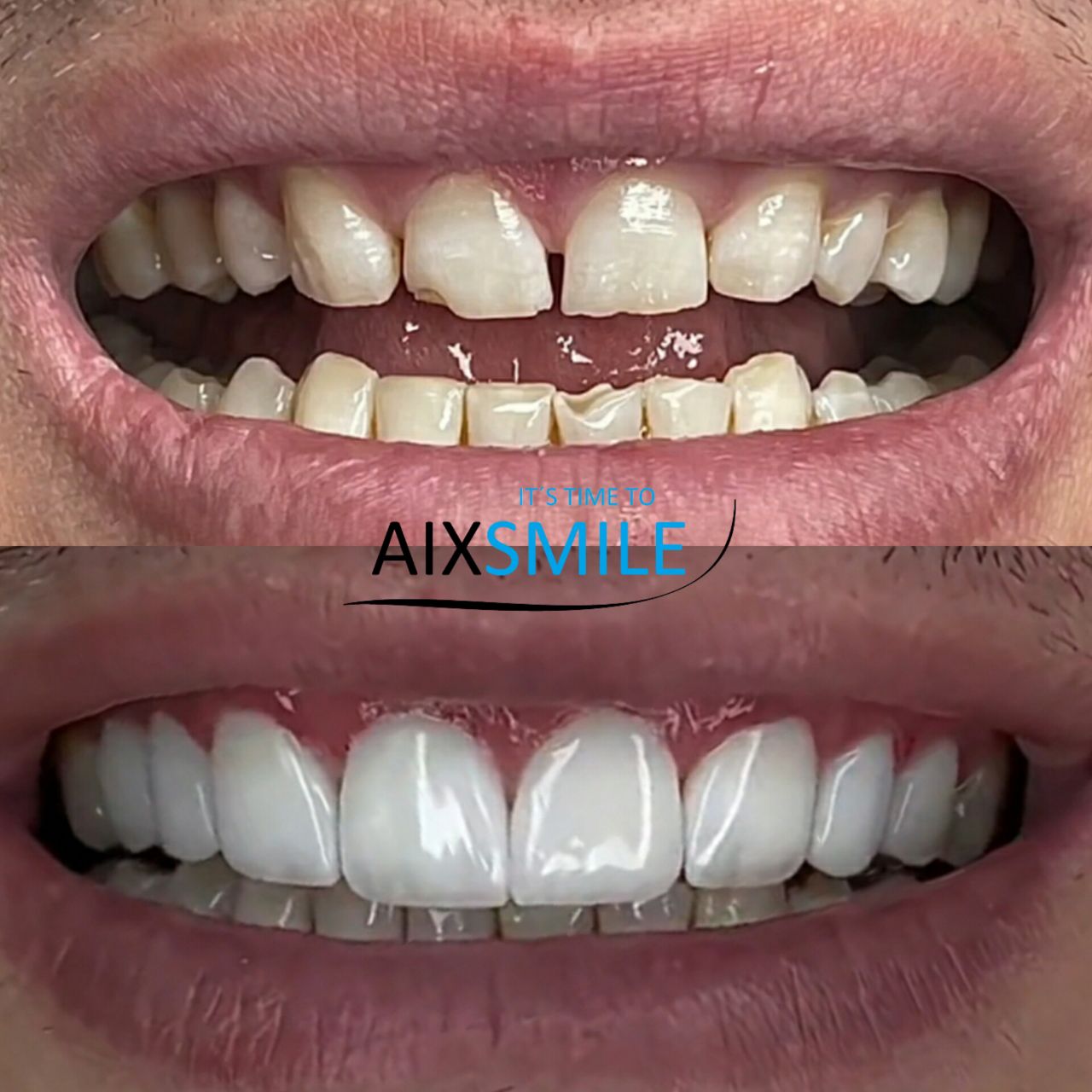
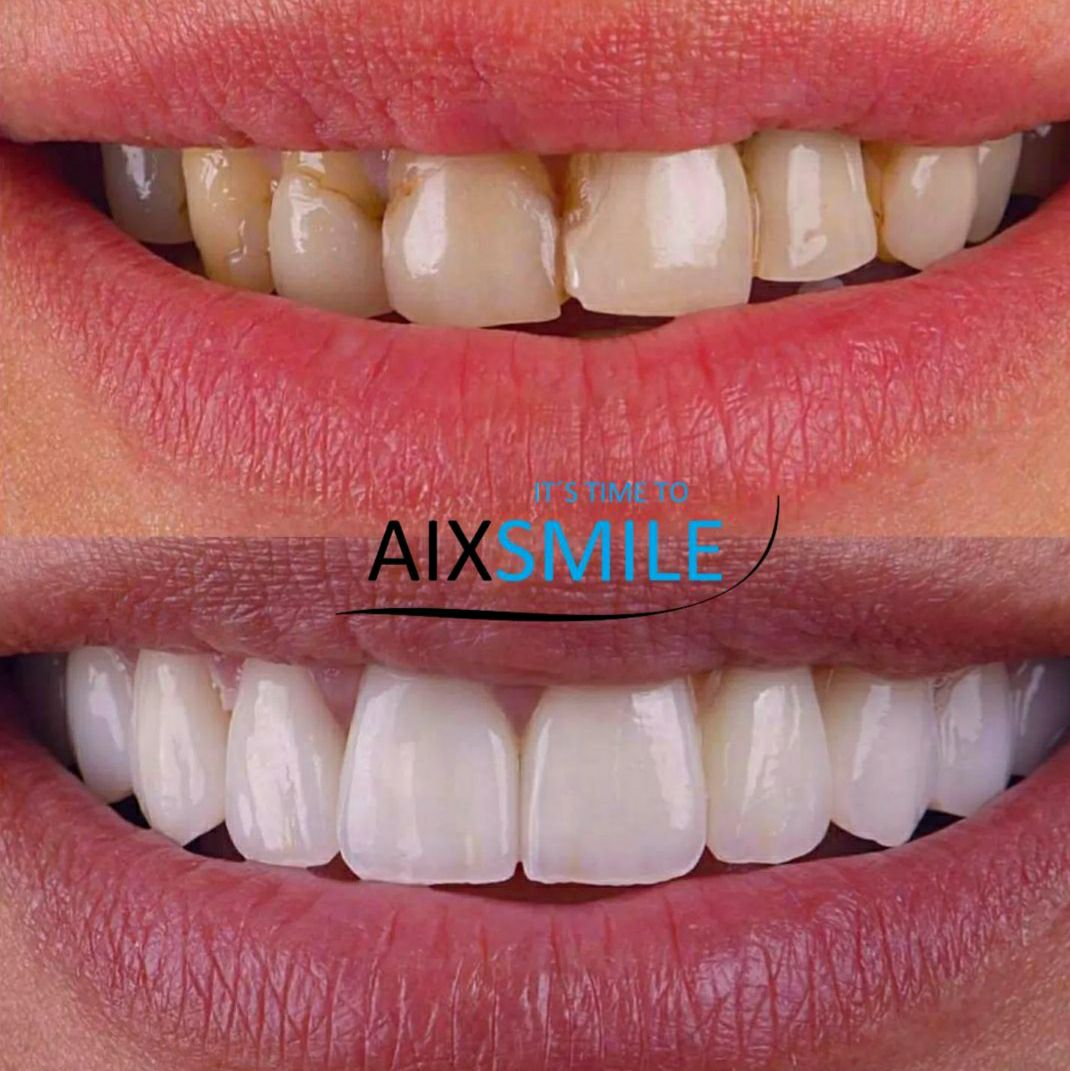
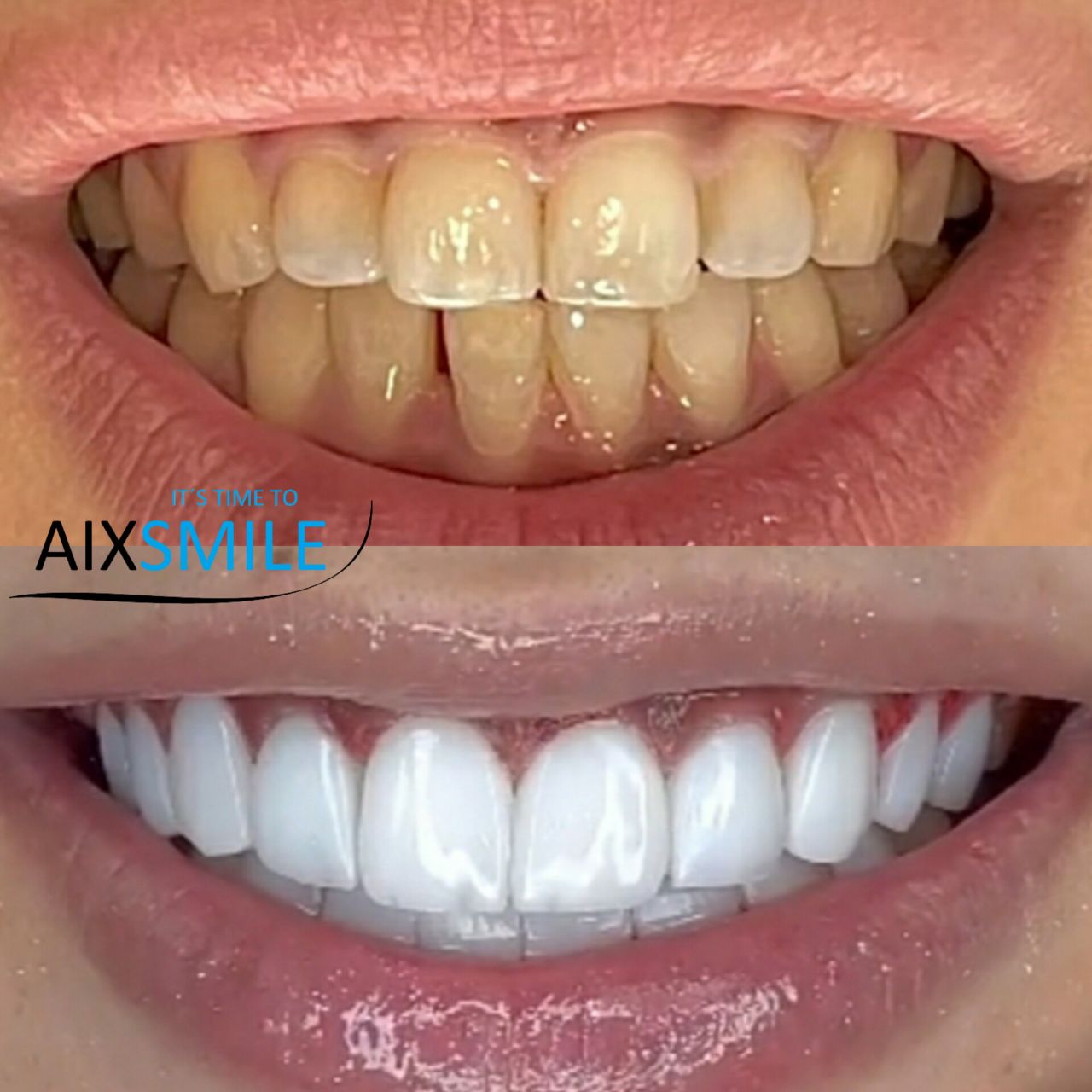
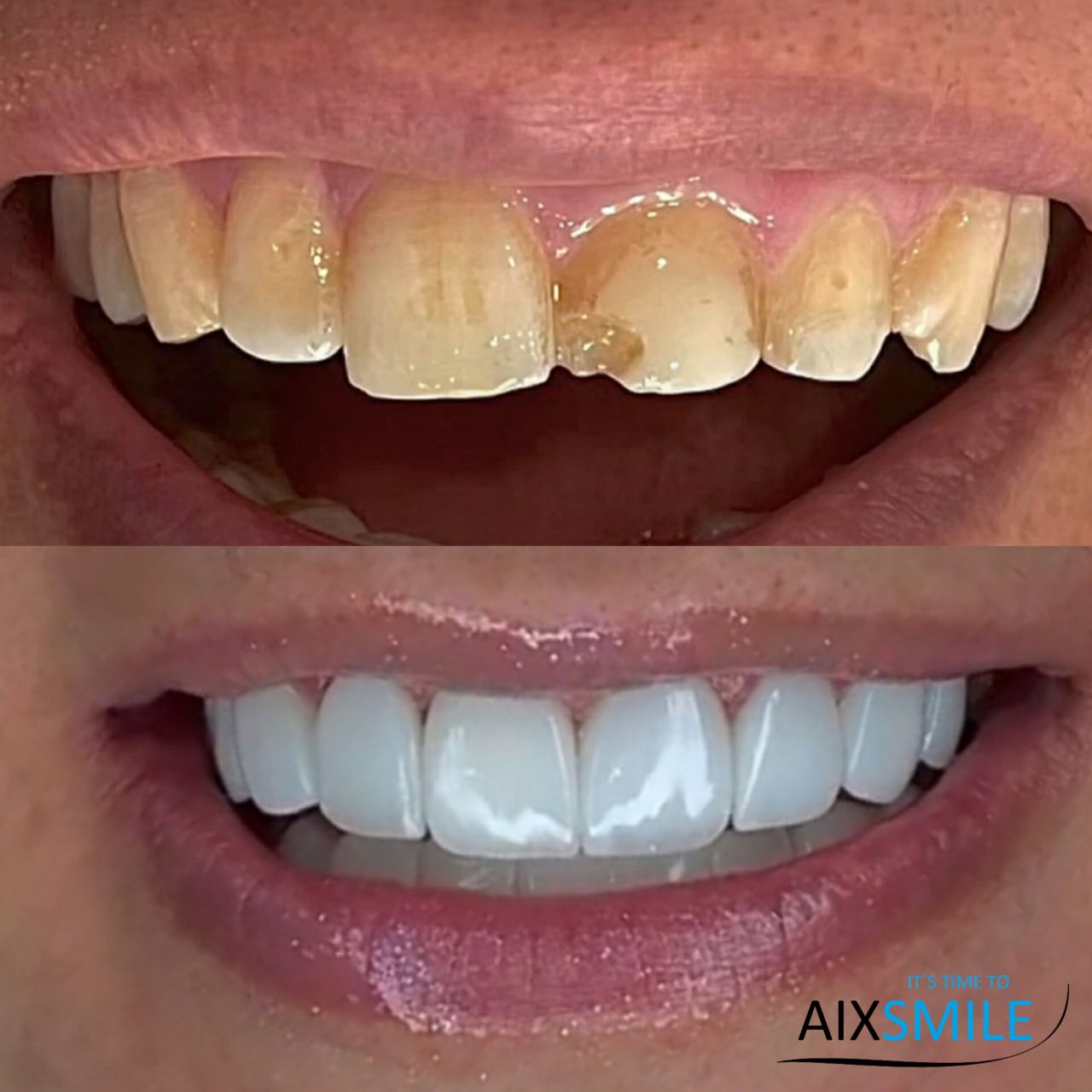
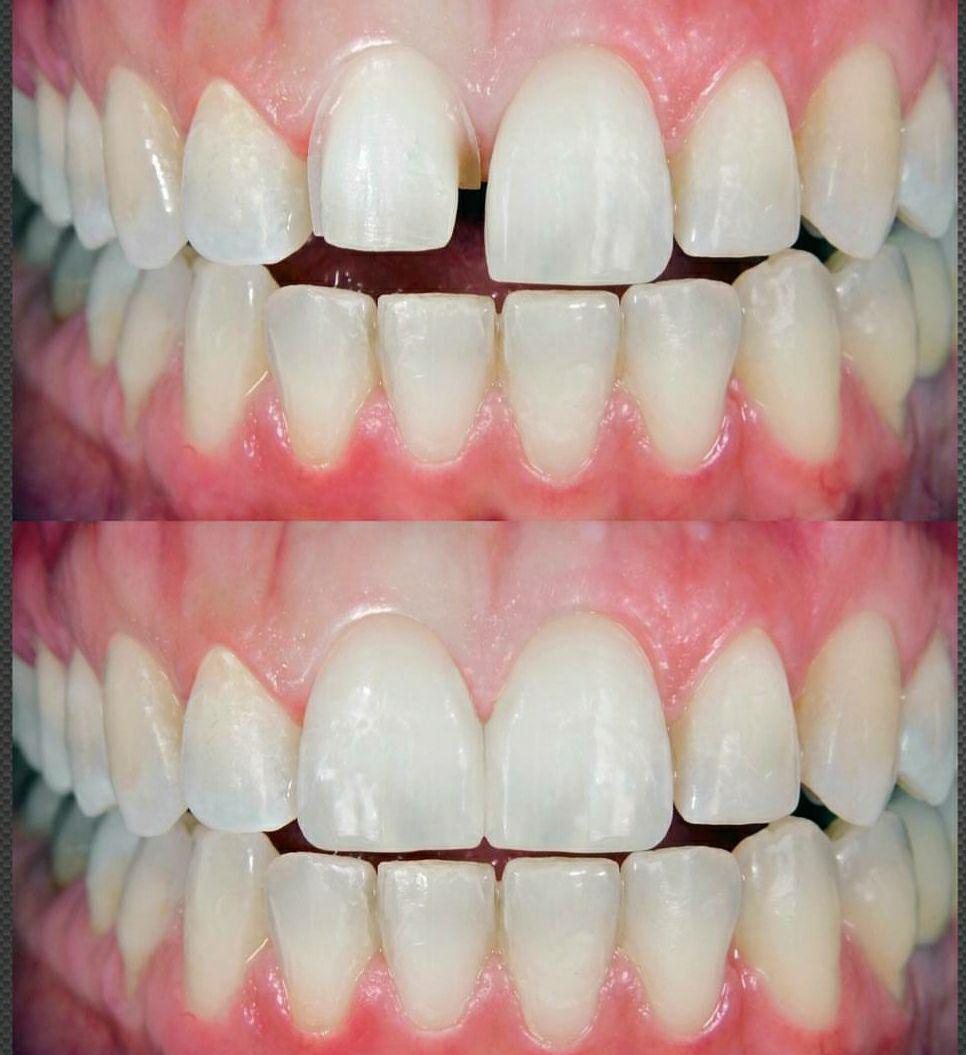
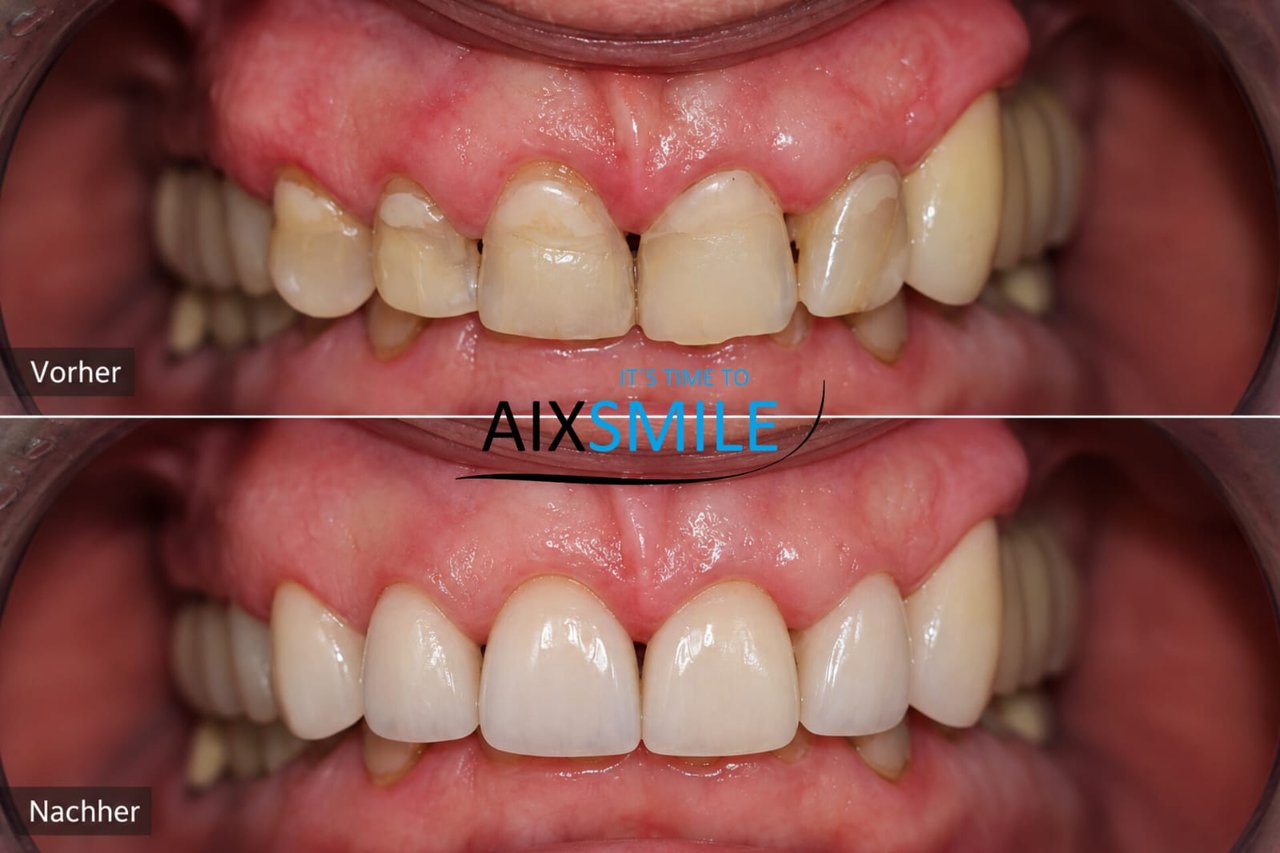
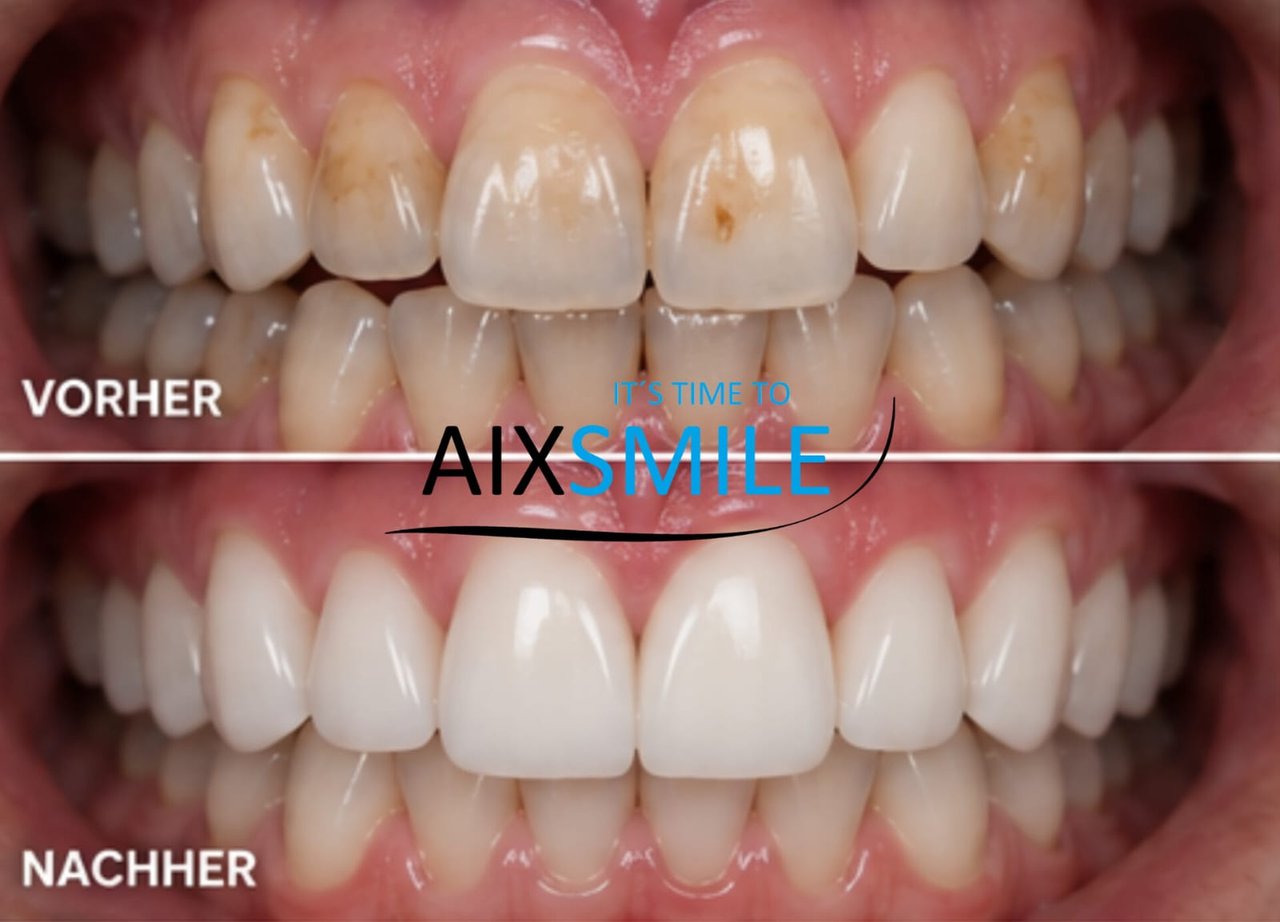
As you scroll, six shells settle onto the teeth one pair at a time. There is no new tooth, only a new surface. Colour, shape and shine change. The tooth underneath stays yours.
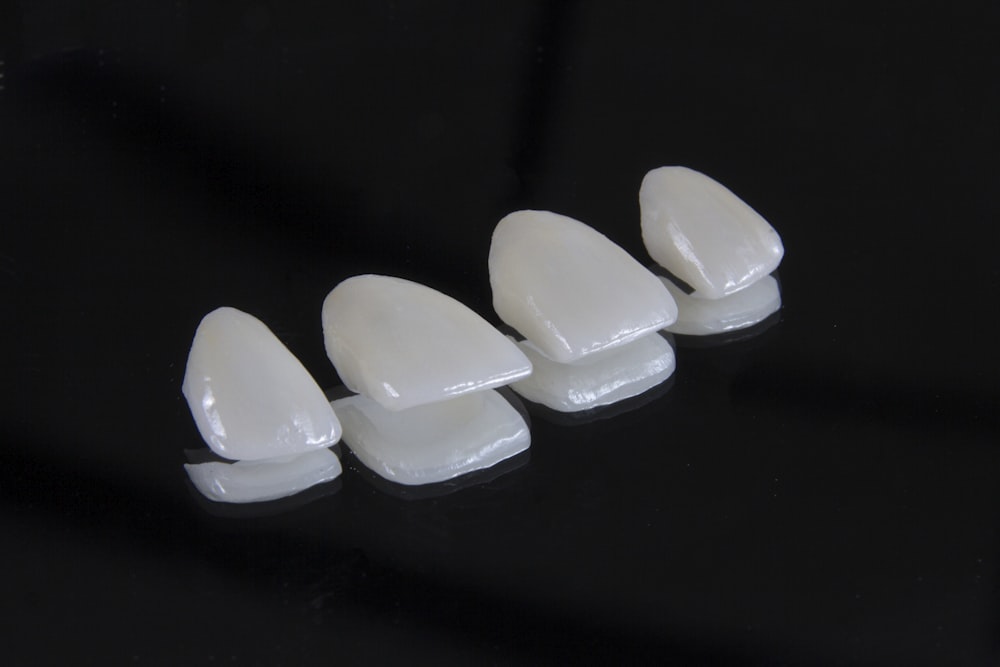
How thin is thin? 20-fach vergrößert
true thickness · 2 materials · 15+ years typical
Bonded to the tooth, not anchored in the bone.
A veneer does not replace a tooth. It covers it. Milled or pressed from ceramic, the wafer-thin shell is bonded with a special resin cement onto the etched, roughened tooth surface. Once the cement cures, shell and tooth behave as one: the ceramic carries the shape and the shine, the tooth beneath still carries the bite.
Because ceramic is translucent, your own tooth colour shows through slightly. That is why we choose the shade in daylight, with you awake, before anything is touched. Anyone planning to whiten does it first: once a veneer is bonded, its colour is fixed for good.
Ceramic or composite.
Two materials are available. Which one fits depends on your tooth, your expectations and your budget. We discuss that openly, before anything is prepared.
Ceramic
Stain-resistant and translucent
Ceramic veneers are particularly stain-resistant, translucent and, with good care, stable for many years. Because light enters the shell as it does real enamel, the result looks alive rather than flat.
Composite
More affordable and easier to repair
Composite veneers are more affordable and easier to repair later on. In return they are more prone to discolouration: coffee, tea and tobacco leave marks here sooner than on ceramic.
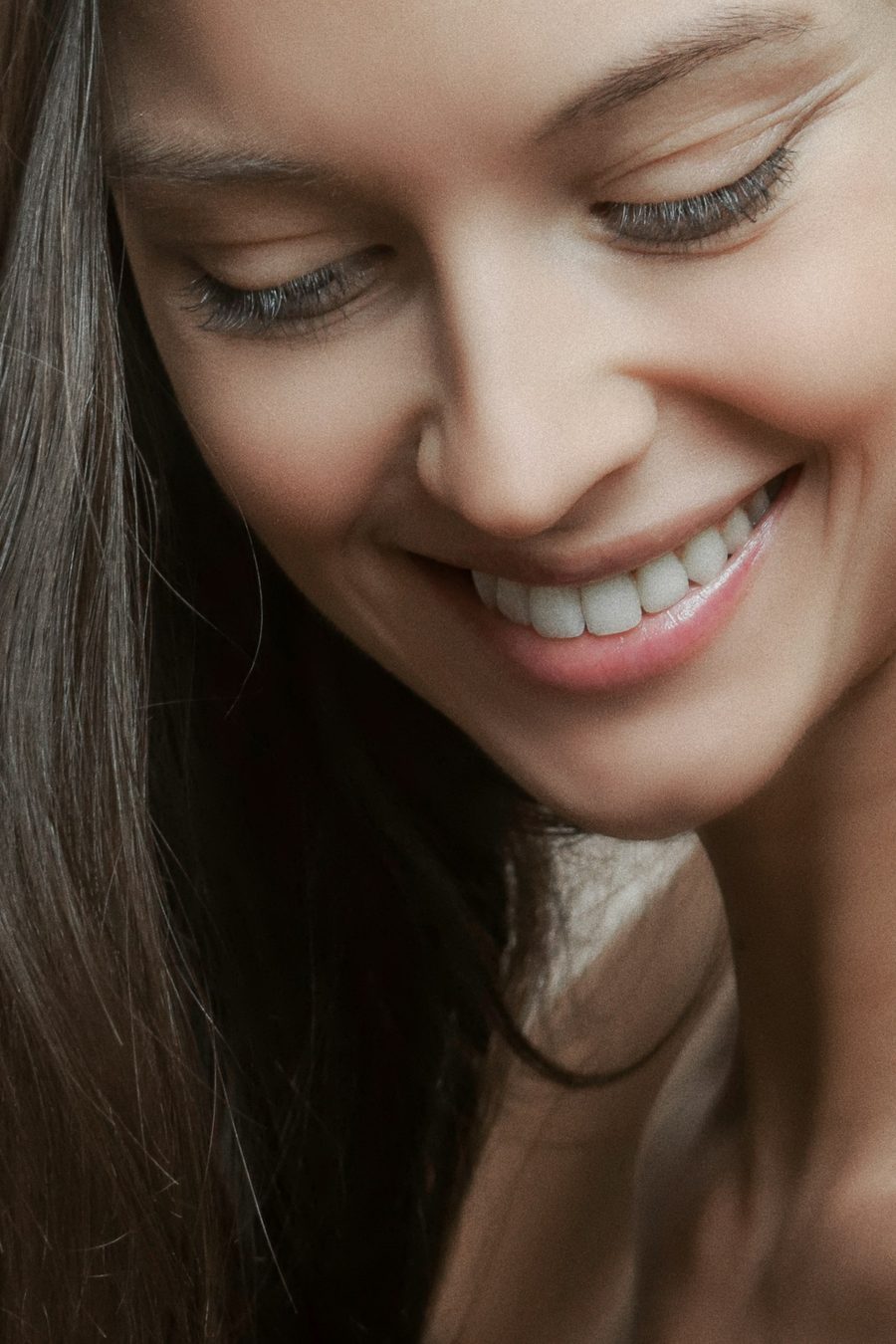
Without preparation? In suitable cases we offer minimally invasive or “no-prep” veneers (Lumineers), which require little to no grinding of the natural teeth. We assess carefully whether that is an option for you.
Six shells, seated tooth by tooth.
The difference is one of scope: a crown wraps the entire visible tooth, while a veneer stays confined to the front surface and the edge. The back, the contact points with neighbouring teeth, and most of your own tooth structure are left untouched.
This has two advantages. The tooth stays stronger because less of it is removed. And if a shell chips years later, only that one piece is replaced, not the whole tooth.
When veneers are a good idea, and when not.
- Healthy gums and no untreated decay on the teeth involved.
- Enough of your own enamel left to bond to. With little remaining, a crown is often the better fit.
- Nighttime clenching or grinding addressed beforehand, with a guard if needed.
- Anyone wanting whiter teeth does it before shade selection, because a veneer's colour cannot be bleached afterwards.
Start with the scan, not the drill.
In a thorough first appointment we look at photographs and a digital scan together and talk honestly about whether veneers are the right tool for what you'd like to change, or whether another treatment fits better.